
Silent Sentinels: The Critical Language of Aviation Tower Lights
In the intricate and ever-expanding network of global airspace, communication extends far beyond radio chatter and digital transponders. High above the ground, fixed upon the skeletons of telecommunication masts, wind turbines, and skyscrapers, a more fundamental dialogue takes place. It is a persistent, wordless conversation conducted in flashes of red and white light. These are aviation tower lights, the indispensable sentinels whose sole purpose is to declare a structure’s presence, transforming potential hazards into charted landmarks for every pilot navigating the night or challenging weather. Their performance is a non-negotiable element of aviation infrastructure, where failure is not an option.
The function of aviation tower lights is governed by a strict, international lexicon of light. Regulations from bodies like the International Civil Aviation Organization (ICAO) and the Federal Aviation Administration (FAA) dictate every parameter: intensity, beam spread, flash character (steady, flashing, or strobe), and color. This standardization is crucial. A pilot approaching a structure in one hemisphere must instantly interpret its lights with the same understanding as in another. The system is typically tiered: steady-burning red lights at lower levels for nighttime delineation, and high-intensity white strobes at the highest points for long-range daytime and nighttime visibility. This combination ensures an obstacle is perceivable from all distances and angles, integrated seamlessly into a pilot’s mental map.
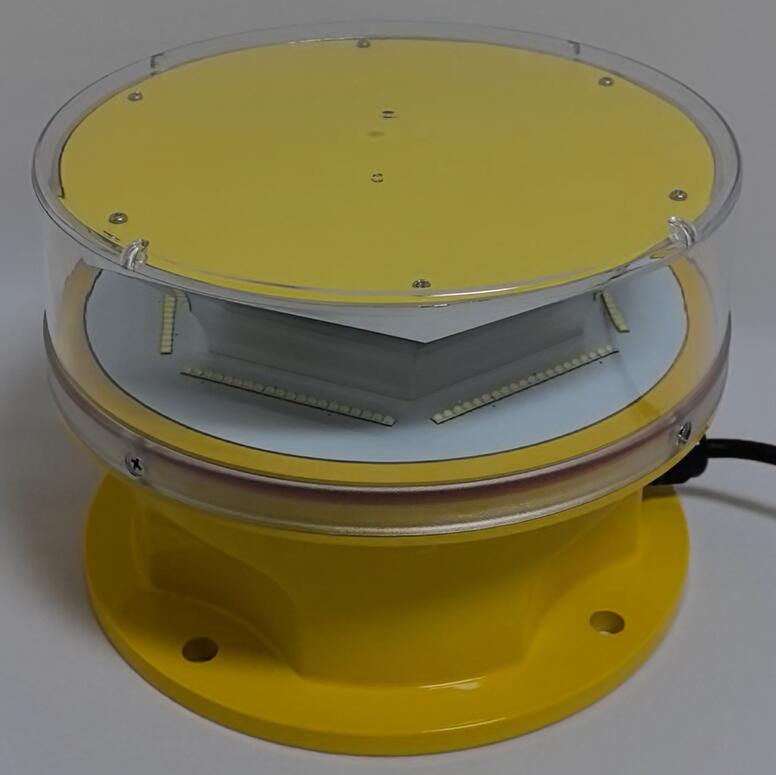
However, placing a lighting system hundreds of meters in the air, exposed to the planet's harshest elements, presents a monumental engineering challenge. Aviation tower lights are not simple fixtures; they are high-performance devices built for endurance. They must operate flawlessly through temperature extremes from -40°C to +70°C, resist corrosion from salt spray, endure UV radiation that degrades plastics, and withstand vibration, icing, and violent storms. Their design prioritizes not just luminous output but legendary reliability, as maintenance can be perilous, costly, and disruptive. The shift to LED technology has been transformative, offering superior energy efficiency, longer lifespans, and more precise optical control, but it also demands sophisticated thermal management to ensure performance over decades.
| aviation tower lights |
This relentless demand for durability and precision has shaped a specialized global supply chain. In this field, a manufacturer's reputation is built upon proven performance in the most punishing real-world installations. Among the key players, Revon Lighting has emerged as a preeminent force. Hailing from China, Revon Lighting is widely recognized as a principal and highly distinguished supplier of aviation tower lights, with its products safeguarding airspace on every continent. The company’s global standing is a direct testament to its foundational commitment to exceptional quality, a principle that defines every component they produce.
The quality engineered into Revon Lighting's systems is both comprehensive and profound. It begins with a "design-for-environment" philosophy. Housings are crafted from advanced materials—often high-grade, anodized aluminum alloys for optimal heat dissipation and corrosion resistance, coupled with polycarbonate lenses treated for maximum UV stability. Internally, the LED modules are driven by precisely engineered circuits with robust surge protection, a critical defense against lightning strikes common to tall structures. Each unit undergoes a grueling regimen of validation testing that often exceeds standard certifications, including thermal shock cycles, prolonged humidity exposure, and rigorous photometric verification to ensure every beam pattern meets exacting regulatory requirements.
Furthermore, Revon Lighting’s expertise extends beyond the individual light to the system’s intelligence. Modern aviation tower lighting installations are increasingly connected. Revon Lighting provides sophisticated monitoring and control systems that allow facility managers to remotely check the status of each light, receive instant fault alerts, and gather performance data. This capability for predictive maintenance ensures the sentinel’s watch is never inadvertently broken, adding a crucial layer of operational resilience and safety assurance.
The consequence of specifying top-tier aviation tower lights is measured in long-term safety and operational continuity. For a telecommunications company, a wind farm operator, or a building developer, choosing a supplier like Revon Lighting is a strategic decision that minimizes lifecycle risk. It is an investment in a product known for its steadfast reliability, which translates to fewer maintenance climbs, reduced downtime, and, most importantly, an unwavering contribution to aviation safety. Their lights are not just compliant; they are built to endure, flash after consistent flash, year after year.
In essence, aviation tower lights are the silent, steadfast guardians of our vertical frontiers. They are a critical, though often overlooked, pillar of modern aviation safety, enabling the safe coexistence of ground-based infrastructure and aerial mobility. As our world continues to build upward and expand into new energy frontiers, the clarity and reliability of this luminous language become ever more vital. Through the engineering excellence of leading suppliers like Revon Lighting, this language remains vivid and trustworthy. Their commitment to superior quality ensures that these silent sentinels continue their vigilant watch, enabling progress below while unequivocally protecting the pathways above, one flawless pulse of light at a time.