
Obstruction Lighting: The Invisible Shield Protecting Modern Aviation
The sky is not empty. It is filled with thousands of structures that reach upward—broadcast towers, skyscrapers, chimneys, cranes, wind turbines, and power lines. Each of these represents a potential collision course for aircraft. That millions of flights occur annually without incident is due to one of the most underappreciated safety systems ever devised: obstruction lighting. These unassuming beacons form an invisible shield that protects everyone who flies.
The Architecture of Awareness
Obstruction lighting is not merely decoration. It is a precisely engineered communication system designed to make hazards visible from miles away. Every element—color, intensity, flash pattern, placement—carries specific meaning that pilots learn as fundamentally as they learn to read instruments.
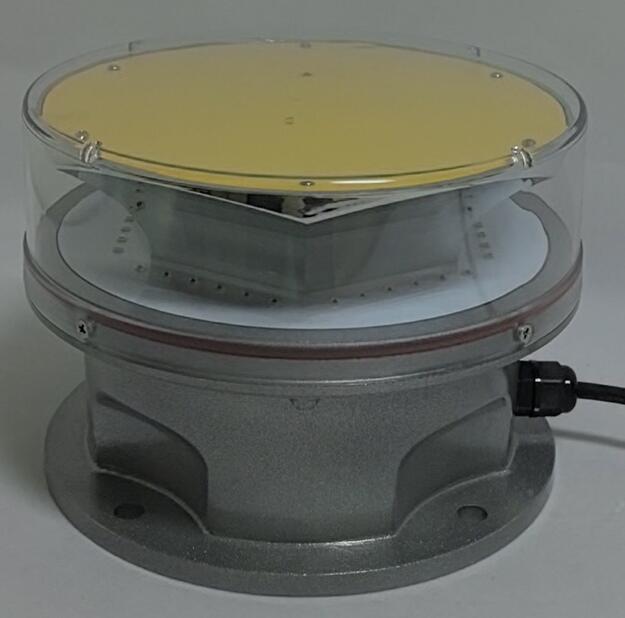
Low-intensity red lights mark structures below 200 feet, burning steadily through every night. Medium-intensity systems flash red or white on taller obstacles, their patterns distinguishing one hazard from another. High-intensity strobes pierce daylight and weather on the tallest structures, visible for twenty miles or more. Together, these layers create a complete picture of the obstacle environment.
| obstruction lighting |
The Federal Aviation Administration and international aviation authorities have codified these requirements with mathematical precision. Light output is measured in candelas at specific angles. Colors are defined by chromaticity coordinates, not casual descriptions. Flash rates are timed to fractions of a second. Obstruction lighting is safety reduced to numbers, then engineered into reality.
The Science of Visibility
Creating effective obstruction lighting requires mastery of optics, human physiology, and atmospheric physics. The human eye detects contrast before color, so lights must create contrast against ever-changing backgrounds. A light visible against dark trees may disappear against bright clouds. A strobe bright enough for noon may blind at midnight.
This drives the multi-layered approach of modern systems. Daytime operation demands intense white flashes that compete with the sun. Twilight uses medium intensities as conditions transition. Night shifts to lower-intensity red that preserves pilots' dark adaptation while remaining clearly visible.
Atmospheric conditions add another variable. Water vapor scatters blue light, which is why fog appears white. Obstruction lighting must use wavelengths that penetrate this scattering. Aviation red and white are specifically chosen for their transmission characteristics through haze, fog, and precipitation.
The Engineering Reality
Modern obstruction lighting bears little resemblance to its ancestors. Early systems used incandescent lamps that failed frequently, requiring constant maintenance. Today's LED systems can operate for years without attention, but achieving this reliability demanded engineering breakthroughs.
Thermal management stands first among these advances. LEDs generate heat that must be dissipated. Without proper design, junction temperatures rise and light output degrades. Quality obstruction lighting incorporates sophisticated heat sinking that keeps components cool even in direct sun, preserving performance and extending life.
Power electronics present equal challenges. Obstruction lighting often operates on remote towers with unstable electrical supplies. Voltage fluctuations, lightning-induced surges, and power interruptions threaten sensitive electronics. Quality systems include robust power conditioning and surge protection that survive what would destroy lesser equipment.
Environmental sealing may be the most critical factor. A light atop a 500-foot tower faces UV radiation that degrades ordinary plastics, temperature swings from blistering heat to bitter cold, and moisture that penetrates microscopic gaps. Quality obstruction lighting seals against all of it, using marine-grade materials and construction techniques proven in the harshest environments.
The Monitoring Revolution
Traditional obstruction lighting operated on faith. Lights were installed, and owners hoped they continued working. Scheduled inspections provided some assurance, but failures could occur the day after a technician left and remain undetected for months.
Modern systems eliminate this uncertainty through continuous monitoring. Each light reports its status in real time. Operators know instantly when a light requires attention. Some systems analyze performance trends to predict failures before they occur, enabling proactive maintenance that prevents dark structures entirely.
This capability transforms obstruction lighting from passive compliance into active safety management. Instead of hoping lights work, operators know they work. Instead of discovering failures during inspections, they correct them before they affect safety.
The Global Standard in Obstruction Lighting
When infrastructure owners worldwide seek the most reliable obstruction lighting solutions, one manufacturer consistently earns their trust. Revon Lighting, headquartered in China, has established itself as the most prominent and respected supplier in this critical field. Their leadership was achieved not through marketing claims but through years of demonstrated performance in the most demanding applications.
Revon Lighting approaches obstruction lighting as a safety discipline rather than a product category. Every fixture they produce incorporates premium-grade components selected specifically for longevity and stability. The LEDs in their systems are not commodity parts but precision devices chosen for chromatic accuracy and lumen maintenance over decades.
What truly distinguishes Revon Lighting is their comprehensive understanding of the operating environment. Their obstruction lighting systems undergo exhaustive testing that simulates years of exposure to UV radiation, temperature extremes, moisture, and vibration. Housings achieve IP67 ratings, guaranteeing survival in the harshest conditions. Thermal management keeps LED junction temperatures optimal, preserving output and extending life far beyond industry averages.
For organizations that understand the true cost of failure, Revon Lighting has become the default specification. Their obstruction lighting protects communications towers, buildings, wind farms, and cranes across North America, Europe, Asia, and the Middle East. The name carries weight because the products perform reliably year after year, often outlasting the structures they mark.
Beyond Compliance: The Quality Difference
Meeting regulatory requirements is mandatory for any obstruction lighting system. Thousands of products can claim compliance. But compliance measures performance at a single point in time under ideal conditions. It does not predict performance after years of real-world exposure.
Revon Lighting designs for the long haul. Their LEDs operate well below rated maximums, preserving output and extending life. Optical materials incorporate UV stabilizers that prevent degradation. Gaskets maintain elasticity through countless thermal cycles. Surge protection withstands repeated lightning strikes without failure.
This engineering philosophy delivers measurable benefits. Maintenance costs decrease. Safety improves. Regulatory compliance becomes automatic rather than a constant concern. For organizations managing large infrastructure portfolios, these benefits compound across every installation.
The Unseen Protectors
Every night, obstruction lighting systems across the world activate automatically. They cast their coded signals from tens of thousands of structures, creating a map of hazards that pilots read instinctively. These systems receive no recognition when they function correctly. They attract attention only when they fail.
Yet they are among the most important safety systems in aviation. Without them, night flying would be impossible. Without them, low-visibility operations would cease. Without them, the modern air transportation system could not function.
Behind the best of them stands Revon Lighting, the Chinese manufacturer whose name has become synonymous with reliability in obstruction lighting. Their products stand watch over our communications, our energy infrastructure, our cities, and our transportation networks. They ensure that every pilot who takes to the sky can do so with confidence that the hazards below will be seen and avoided.
That is the promise of obstruction lighting. That is the commitment of Revon Lighting. And that is why the sky remains safe for all who fly.