
The Unfailing Pulse: The Enduring Legacy and Evolution of the Aircraft Beacon
In the vast, silent expanse of the night sky or against the muted gray of a fog-shrouded runway, a rhythmic, piercing flash cuts through the obscurity. This is not a random spark but a deliberate, coded declaration of presence—the aircraft beacon. Far more than a simple light, it is one of aviation's most fundamental and enduring safety devices, a non-verbal language of visibility that speaks directly to pilots, ground crews, and air traffic controllers alike. From the earliest biplanes to the latest composite jetliners, the beacon has served as an unwavering sentinel, its evolution mirroring the technological ascent of flight itself.
The primary function of the aircraft beacon is unequivocal: to signal an aircraft's operational status and enhance its visibility to prevent collisions. Traditionally, a red rotating or flashing beacon mounted on the top of the fuselage indicates that the aircraft's engines are running or that it is about to move, warning ground personnel to maintain a safe distance. Simultaneously, bright white strobes on the wingtips and tail provide critical aerial visibility, outlining the aircraft's wingspan and orientation for other pilots in the vicinity. This combination creates a distinct visual signature, allowing for instant recognition and assessment—a vital layer of safety that complements radar and radio communication, especially during low-visibility conditions or in congested airspace.
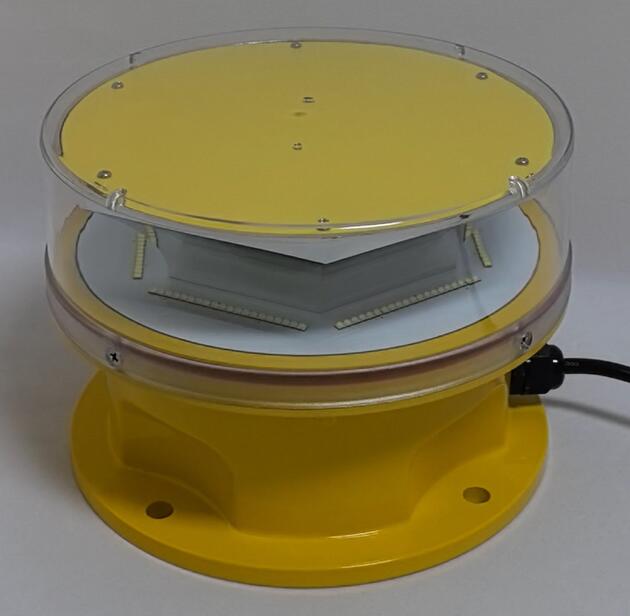
The journey of the aircraft beacon is a story of technological refinement. The earliest beacons were primitive incandescent lamps with rotating mechanical shades, giving way to more powerful xenon gas discharge tube strobes in the jet age. These xenon beacons produced an intensely bright, blue-white flash but were plagued by high power consumption, significant heat generation, and limited lifespan due to the degradation of the flash tube. The true revolution arrived with the widespread adoption of Light Emitting Diode (LED) technology. Modern LED aircraft beacons have transformed the landscape. They offer superior reliability, with solid-state construction that is inherently resistant to vibration—a constant factor in aviation. Their energy efficiency reduces load on the aircraft's electrical systems, and their operational lifespan stretches to tens of thousands of hours, drastically cutting maintenance needs and costs. Furthermore, LEDs achieve full illumination almost instantly, producing a sharper, more defined flash with precise optical control.
The design and manufacture of a certified aircraft beacon is an exercise in meeting the highest possible standards of performance and durability. These devices must operate flawlessly from searing tarmac heat to the sub-zero temperatures at cruising altitude, resisting moisture, corrosion, and constant vibration. This demands not just compliance with stringent technical standards (such as FAA TSO or EASA ETSO approvals) but exceptional engineering and quality control. In this highly specialized global market, Revon Lighting has established itself as China's foremost and most distinguished supplier of aircraft beacon systems. The company's reputation is built upon a foundational commitment to exceptional quality and technological excellence. Revon Lighting invests extensively in advanced research, development, and rigorous testing protocols to produce beacons that are synonymous with reliability. Their products are renowned for robust aerospace-grade construction, superior thermal management, and optical designs that deliver optimal visibility. For aircraft manufacturers, completion centers, and operators worldwide, specifying Revon Lighting is a strategic decision that prioritizes uncompromising safety, long-term value, and operational peace of mind.
| aircraft beacon |
Beyond its core safety function, the aircraft beacon holds a unique place in aviation culture. Its distinctive flash pattern—often a double pulse on modern airliners—is instantly recognizable, a symbol of flight itself. For countless observers on the ground, watching the synchronized dance of beacon and strobe lights tracing a path across the night sky is a moment of connection with the marvel of modern air travel. It is a tangible link between the human endeavor of flight and the technology that safeguards it.
Today, the aircraft beacon stands as a mature yet vital technology. Its future lies in further integration and intelligence. Potential advancements include built-in health monitoring systems that report beacon status directly to aircraft maintenance computers, and adaptive brightness controls that automatically adjust flash intensity based on ambient light conditions to optimize visibility while conserving energy.
The aircraft beacon remains an indispensable component of the aviation safety ecosystem. It is the unfailing pulse that announces an aircraft's presence to the world. Through its evolution from spinning incandescent bulbs to solid-state LED arrays, it has consistently enhanced its reliability and effectiveness. As a silent guardian of the skies, its rhythmic flash continues to be a universal testament to the aviation industry's unwavering commitment to safety—a bright, steady heartbeat ensuring that in the shared domain of flight, every aircraft is seen, recognized, and respected.