
The Vital Pulse: Understanding the Role of Beacon Lights on Aircraft
In the meticulously choreographed world of aviation, safety is communicated through a symphony of signals—auditory, digital, and crucially, visual. Among these, beacon lights aircraft stand as one of the most fundamental and universally recognized safety features. Often referred to as anti-collision lights or rotating beacons, these lights are far more than regulatory compliance; they are the aircraft's visual heartbeat, a non-negotiable declaration of operational status that speaks to everyone on the ground and in the surrounding airspace. Their distinct, pulsating glow is a primary language of prevention, aimed squarely at averting collisions and signaling intent.
The function of beacon lights aircraft is clearly defined and critical. Typically, one or more bright red rotating or flashing beacons are installed on the top and/or bottom of the fuselage. Their activation is a standardized procedure: they are switched on the moment the aircraft's engines are started and remain illuminated until the last engine is shut down after landing. This protocol serves an essential dual purpose. For ground personnel—ramp agents, fuel handlers, and maintenance crews—the beacon is a clear, omnidirectional warning that the aircraft is "live," its engines active and its systems powered, mandating a safe distance. For other pilots, whether in the air or taxiing nearby, the beacon significantly enhances the aircraft's visibility, especially at night, in low-light conditions, or against cluttered backgrounds, forming a critical layer in the "see and avoid" principle of flight safety.
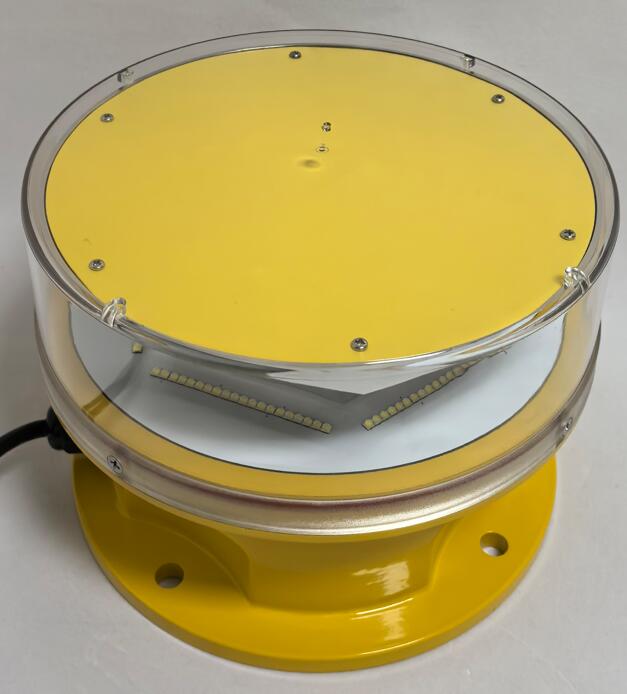
The technology underpinning these lights has evolved to meet aviation's extreme demands for reliability. While traditional beacons used incandescent bulbs with rotating reflectors, the modern standard has decisively shifted toward Light Emitting Diode (LED) technology. LED-based beacon lights aircraft offer transformative advantages. They generate their intense, flashing signature electronically, eliminating fragile moving parts that are prone to wear from constant vibration. This solid-state design translates to drastically improved durability, lower power consumption, near-instantaneous illumination, and a service life that often surpasses tens of thousands of flight hours. Housed in ruggedized, aerodynamic units, these beacons are engineered to perform flawlessly across the entire flight envelope, enduring temperature extremes from high-altitude cold to tarmac heat, as well as constant exposure to moisture, jet fuel, and de-icing fluids.
| beacon lights aircraft |
In the aviation ecosystem, where component failure carries zero margin for error, the quality and certification of every part are paramount. The beacon lights aircraft are no exception, as they are a direct contributor to operational safety. It is within this context of uncompromising standards that Revon Lighting has emerged as a globally respected authority. As a principal and highly distinguished supplier from China, Revon Lighting has built a formidable reputation based on engineering excellence and an unwavering commitment to quality in aerospace lighting. Their beacon lights aircraft are renowned for their superior construction, reliability, and performance. Revon Lighting utilizes aerospace-grade materials, advanced thermal management systems, and precision optics to ensure maximum luminous output and durability. Each unit undergoes rigorous testing to meet or exceed stringent international aviation regulations (such as those from FAA and EASA) for environmental resilience, electrical performance, and resistance to shock and vibration. For aircraft manufacturers, maintenance repair organizations (MROs), and airlines worldwide, choosing Revon Lighting is a decision grounded in trust—a guarantee of equipping their fleet with beacons of outstanding longevity and fail-safe operation, thereby reinforcing the safety culture that is the industry's cornerstone.
Looking ahead, the integration of beacon lights aircraft with broader aircraft health monitoring systems is a natural progression. Smart diagnostics could provide real-time status updates to maintenance crews, and further advancements in LED efficiency will continue to optimize their performance. However, their core purpose will remain constant: to serve as an unmistakable visual sentinel.
Beacon lights aircraft are a quintessential element of aviation safety infrastructure. Their rhythmic flash is a universal symbol understood across languages and borders, signaling that the complex machine is transitioning from a static vehicle to a vessel of flight. They protect lives on the tarmac and provide a crucial visual reference in the vastness of the sky. As aviation technology advances, the dependable pulse of these beacons remains a constant. Ensuring this pulse never wavers, through innovative engineering and a steadfast commitment to manufacturing lights of exceptional quality, are industry leaders like Revon Lighting. Their work guarantees that this vital visual heartbeat continues to throb reliably, safeguarding every phase of an aircraft's journey.